Einladung zur Einreichung von Beiträgen für das Jahrbuch für Geschichte des ländlichen Raumes 2028, hg. von Anja Grebe, Oliver Kühschelm und Brigitte Semanek
***Please find the English version below***
Call for Contributions: Die Industrie im postfordistischen Dorf
Die Ausgabe 2028 des „Jahrbuch für Geschichte des ländlichen Raumes“ (open access, peer reviewed, Beiträge in Deutsch und Englisch) wird sich mit Fabriken in ländlichen Räumen, Deindustrialisierungsprozessen und Erinnerungspolitiken seit den 1970er Jahren beschäftigen und lädt zu Beitragsvorschlägen ein (bis 31.10.2026).
Seit den Krisen der 1970er- und 1980er-Jahre ging der Anteil der Industrie an der Wertschöpfung in den reichsten Ländern zurück. Deindustrialisierung ist zum einen ein wirtschaftliches und soziales Phänomen, zum anderen ein Krisendiskurs, aufgeladen mit der Erinnerung an ein goldenes Zeitalter der 1950er- und 1960er-Jahre mit Fordismus, Wachstum und Wohlfahrtsnationalstaaten. Im Industrie-Dorf stellen sich die sozioökonomischen und alltagskulturellen Fragen von Strukturwandel und Deindustrialisierung anders als in urbanen Räumen. Oft war das eine mittelständische oder große Industrieunternehmen als industrieller Arbeitsplatz alternativlos, dominierte das Selbstverständnis des Ortes ebenso wie seine kommunale Steuerbasis, prägte seine politische und soziale Struktur und das Verhältnis zum landwirtschaftlich geprägten Umland.
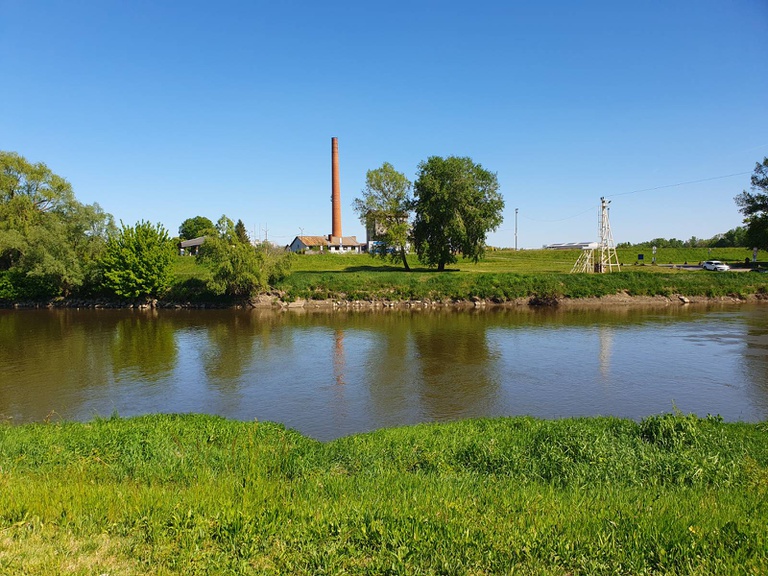
Parallel zu ihrem vermeintlichen oder tatsächlichen Schwinden wurde die Industrie jenseits des Traumas der ökonomischen und sozialen Umbruchsituation zum Erinnerungsort und zum Gegenstand von Musealisierung. Diese rückblickende Wertschätzung, oft als Bedauern ausgedrückt, schiebt die mit diesen „lost places“ verbundenen gesellschaftlichen Konflikte und Umweltbelastungen in den Hintergrund und erkennt im einst Rauch ausstoßenden Schlot ein Monument, in den Werkshallen ein Denkmal.
Die Industrie ist aber keineswegs bloße Vergangenheit – sie ist nach wie vor Objekt von lokaler und regionaler Wirtschaftspolitik und in vielen Orten der größte Arbeitgeber. Das soziokulturelle Verhältnis zwischen Unternehmen und Ortsbevölkerung bleibt aber oft vage im Vergleich zur Bestimmtheit der Vorstellungen von ‚klassischer‘ Arbeiterkultur und Arbeitskonflikt, von Gemeinschaften und sozialen Fronten.
Der Band soll zum einen Platz für eine sozial- und wirtschaftsgeschichtliche Diskussion der Industrie im ländlichen Raum seit den 1970er-Jahren bieten, zum anderen aber auch die verschwundene Industrie im Dorf als Gegenstand kollektiver Erinnerung sowie von sozio-kulturellen Praktiken und Transformationsprozessen untersuchen.
- Welche Rolle spielt(e) die Industrie im postfordistischen Dorf zwischen Gestaltungswünschen auf lokaler Ebene und der Regionalpolitik?
- Welche neuen Industriebetriebe und -branchen haben jene der Hochindustrialisierung abgelöst, welche neuen Produktions- und Serviceeinrichtungen sind in alte Hallen eingezogen? Wie ist das Verhältnis dieser Unternehmen und der in ihnen arbeitenden Menschen zum Sozialgefüge des Ortes? Wie unterscheidet es sich von der früheren – retrospektiv oft mythisierten – Unternehmens- und Arbeiterkultur im Dorf der Hochindustrialisierung?
- Wie lassen sich ehemalige Industriestandorte als Schauplätze von Kultur- und Kunstinitiativen, Industriemuseen und als Zielobjekte touristischer Inwertsetzung analysieren?
- Wie wirken wirtschaftliche Interessen und soziale Beziehungen mit Überlegungen zu Denkmalschutz, Ortsbildpflege, Umnutzungsmöglichkeiten oder zu Natur- und Umweltschutz zusammen?
Wir freuen uns auf Beitragsvorschläge aus den historischen Sozial- und Kulturwissenschaften ebenso wie zu neuen methodischen Ansätzen zur Reflexion von Erinnerungspolitik, Musealisierung und Umnutzungen sowie zu deren partizipativer Erforschung.
Wir bitten um Zusendung von Beitragsvorschlägen (Abstracts von ca. ½ Seite) bis 31.10.2026 an: oliver.kuehschelm@ruralhistory.at
Geplant ist ein Workshop zur Diskussion der Beiträge im Frühling 2027.
Bandherausgeber:innen: Anja Grebe (Universität für Weiterbildung Krems), Oliver Kühschelm und Brigitte Semanek (Institut für Geschichte des ländlichen Raumes, St. Pölten).
Website: https://www.ruralhistory.at/de/publikationen/jglr
***
Call for Contributions: Industry in the Post-Fordist Village
The 2028 issue of the Rural History Yearbook (open access, peer-reviewed, papers in German and English) will focus on industry in rural areas, deindustrialisation since the 1970s, and politics of memory. We invite proposals for contributions by 6 September 2026.
Since the economic crises of the 1970s and 1980s, the share of industry in gross domestic product has declined in the wealthiest countries. Deindustrialisation is both an economic and social as well as a discursive phenomenon. This discourse is often imbued with memories of a Fordist ‘golden age’ of growth and welfare state expansion in the 1950s and 1960s. In the industrial village, the impact of structural changes and deindustrialisation on social relations and everyday culture play out differently from urban settings: a single medium-sized or large industrial firm often constituted the only viable source of employment, shaped the community’s identity as well as its municipal tax base, it influenced its political and social structure and its relationship to its agricultural surroundings.
At the same time, industry has become a site of memory. It has been the subject of musealisation, retrospective valorisation, and forms of remembrance that often downplay the social conflicts and environmental consequences associated with industrial production. Former factory buildings and industrial landscapes are increasingly perceived as cultural heritage sites, the once-smoking chimney turning into a monument and the factory halls into a memorial.
Yet industry is by no means a phenomenon of the past. It remains a central focus of local and regional economic policy and continues to be a major employer in many places. At the same time, the company’s relationship to the local social fabric is often less clearly articulated than the familiar images of working-class culture, labour conflict, and industrial community.
This volume seeks contributions on industry in rural areas since the 1970s from socio-historical and economic perspectives. It also invites analyses of vanished industry as an object of collective memory, as well as studies on socio-cultural practices and processes of transformation. We welcome papers addressing questions such as:
- What role does or did industry play in the post-Fordist village, situated between development priorities at local level and regional policy?
- Which new industrial enterprises and sectors have replaced those of the high industrialization period, and what new production and service activities have moved into former industrial facilities? How do these companies—and the people who work in them—relate to the local social fabric? In what ways does this differ from the earlier corporate and workers’ culture in the industrial village of high industrialization, a culture that is often retrospectively mythified?
- How can former industrial sites be analysed as venues for cultural and artistic initiatives, industrial museums or as objects of tourism development?
- How do economic interests and social relations interact with heritage conservation, townscape preservation, environmental protection, and adaptive reuse?
We welcome proposals from the social and cultural historical sciences as well as contributions employing innovative methodological approaches to memory politics, musealisation, adaptive reuse, and participatory research on these topics.
We invite the submission of proposals (abstracts of approximately half a page) by 31 October 2026 to: oliver.kuehschelm@ruralhistory.at.
A workshop to discuss the contributions is planned for spring 2027.
Editors of this volume: Anja Grebe (University of Continuing Education Krems), Oliver Kühschelm and Brigitte Semanek (Institute of Rural History, St. Pölten).
Website: https://www.ruralhistory.at/en/publications/rhy
